Hey there, let’s talk about something that’s been on the minds of a lot of folks reaching out to me lately—especially since I’m part of a LMO lithium battery supplier team: the corrosion resistance of LMO batteries. If you’re in the market for battery tech, you’ve probably heard of LMO—lithium manganese oxide, right? It’s been a workhorse in everything from power tools to electric bikes, and even some older EV models, but there’s still a lot of confusion around how it holds up against corrosion. Let’s break this down like we would with a customer who just sent us an email asking, “Will my LMO batteries hold up in humid coastal environments?” No stuffy jargon, just real, practical info from someone who’s been in the game for years. LMO Lithium Battery
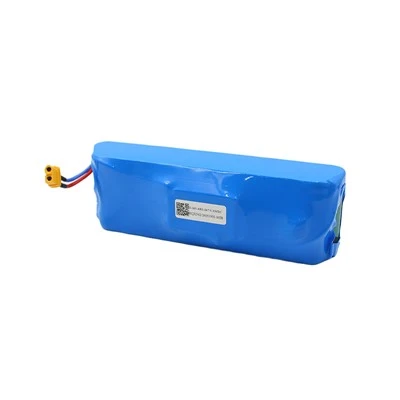
First, let’s get one thing straight: corrosion in lithium-ion batteries isn’t just “rust.” It’s a breakdown of the battery’s internal materials that happens when unwanted chemical reactions eat away at key components—think electrodes, separators, electrolyte, even the current collectors. For LMO specifically, the main players here are the manganese in the cathode and the aluminum current collector it’s attached to. That’s where most of the corrosion headaches pop up. Let’s start with the manganese because that’s unique to LMO. Unlike NMC (nickel manganese cobalt) or LFP (lithium iron phosphate) cathodes, LMO has a high manganese content—like 40-50% of its cathode material. When LMO batteries are exposed to moisture, high temperatures, or even just deep cycles over time, that manganese can leach out. Leaching is basically tiny bits of manganese breaking off from the cathode and dissolving into the electrolyte. And once that’s in the electrolyte, it can move around, deposit on the anode (usually graphite), and mess up the solid-electrolyte interphase (SEI)—that protective layer that keeps the anode and electrolyte from reacting badly. If the SEI breaks down, you get capacity fade, shorter cycle life, and even safety issues.
Wait, but how fast does that happen? It depends on the environment. I’ve seen LMO batteries that ran for 5 years in a dry, temperate office building still at 85% of their original capacity. But put those same batteries in a place with 80%+ humidity, like a shipping yard in Florida, or where temperatures swing from freezing to 100°F, and that leaching speeds up. High heat makes the electrolyte more reactive, so it eats at the cathode faster, and moisture gets into the battery pack (even if it’s sealed, no seal is perfect forever) to jumpstart the manganese reactions. Another big one: over-discharging. If you drain an LMO battery way below 2.5V per cell, that lowers the pH of the electrolyte, which is like acid to the manganese cathode. I’ve had customers who ran their power tools until they died every time tell me their LMO packs only lasted 2 years, vs. 5+ for folks who stopped at 2.8V. That’s not the battery being bad—it’s corrosion from misuse.
Now, the aluminum current collector. Most lithium-ion cathodes use aluminum foil as the current collector, and LMO’s cathode is pretty reactive, so that aluminum is at risk for corrosion too. If the electrolyte has even a tiny bit of water in it, the aluminum can form aluminum oxide, which is a really thin layer that’s usually protective—but if the cathode’s reactions make the electrolyte too acidic, that oxide layer breaks down. Then you get pitting corrosion, which is tiny holes in the aluminum foil. If those holes go all the way through, the battery loses its ability to carry current, and it dies. I’ve seen this in battery packs that got water damaged—someone left an e-bike out in the rain, and the LMO cells inside ended up with pitted aluminum collectors, so half the pack wouldn’t work.
But here’s the thing: LMO isn’t more prone to corrosion than some other chemistries. Let’s compare to LFP, for example. LFP’s cathode is iron phosphate, which doesn’t leach metal as easily, but its electrolyte is actually more reactive at high temperatures, so its corrosion risk is different. NMC has less manganese, so less leaching, but it has nickel, which is prone to its own corrosion issues when exposed to high humidity. So it’s not like LMO is a “bad” choice—it just has specific corrosion factors you need to plan for. And as a supplier, we’ve figured out ways to mitigate a lot of these issues.
Wait, what do we do at our end to boost LMO’s corrosion resistance? First, we use what’s called “doped” LMO cathodes. That means we add tiny amounts of other metals, like aluminum or magnesium, to the manganese structure. That makes the cathode more stable, so less manganese leaches out. I can’t go into the exact recipe (trade secrets, y’know), but we tested our doped LMO cells against standard LMO cells in a humidity chamber at 85% RH and 45°C—after 1000 cycles, the doped cells had 90% capacity left, vs. 78% for the standard ones. That’s a big difference.
Then there’s the electrolyte. We don’t just use the off-the-shelf electrolyte you can buy for cheap. We add corrosion inhibitors—tiny molecules that bind to the aluminum current collector and form a protective layer, so the electrolyte can’t eat at it. Some people worry inhibitors reduce performance, but we’ve balanced it so our LMO batteries still have the high power density they’re known for (perfect for power tools and e-bikes) while being way more corrosion-resistant. We also seal our battery cells with a double-layered case, not just a single wrapper, and add a small desiccant pack inside to absorb any moisture that gets in—super important for outdoor or marine applications.
But even with all that, there are limits. LMO’s corrosion resistance isn’t great in super harsh environments, like if you’re running batteries in a saltwater submersion scenario. Wait, no—saltwater would corrode any lithium battery, but LMO is a bit more sensitive to salt than, say, LFP? Wait, let me clarify: salt has chloride ions, which are terrible for aluminum collectors. They break down that protective aluminum oxide layer fast. So if you’re using batteries for a marine RV or a boat that gets splashed with saltwater, we’d recommend a coated LMO cell, where the aluminum current collector is coated with a thin polymer film to block chloride. That adds a tiny bit of cost, but it’s way better than replacing batteries every year. I had a customer whose fishing guide business used our coated LMO packs for their trolling motors—they used to go through 3 packs a season, now they’ve gone 2 seasons with no corrosion issues. That’s the kind of feedback we live for.
Another thing to talk about: cycle life vs. corrosion. A lot of folks mix those up. Cycle life is how many times you charge and discharge the battery, while corrosion is the rate at which internal materials break down. But they’re connected. Every cycle creates a little bit of corrosion—each time the SEI layer forms, some material is lost. For LMO, if you do deep cycles (discharging below 2.5V), that adds extra corrosion, so your cycle life drops. But if you keep the charge between 2.8V and 4.2V (standard for LMO), you get a lot less corrosion, and your cycle life can hit 1500 or more, which is solid for most applications. I always tell customers: if you’re using LMO for something that doesn’t need super deep discharges—like a power tool that you top off after each use—corrosion won’t be a problem for 5+ years. If you’re using it for a solar storage system that gets cycled every day, just let us know, and we’ll tweak the cell design to add more corrosion inhibitors.
Wait, what about old vs. new LMO tech? A lot of people remember LMO from the 90s and early 2000s, when the first laptop batteries used it, and those had bad corrosion issues. That was because the doping and electrolyte inhibitors weren’t as advanced. Today’s LMO is way different. We’re working on a next-gen LMO with a spinel structure that’s even more stable—manganese leaching is almost non-existent in lab tests, and the aluminum collector is coated with a new nanomaterial that resists corrosion even in high humidity. We’re still rolling that out, but early prototypes have been in a coastal test site for 18 months, and they’ve only lost 3% capacity, vs. 11% for standard LMO from 5 years ago.
Let’s also address a common myth: some people think LMO batteries corrode faster if they’re stored empty. That’s half true. If you store an LMO battery fully discharged, you’re not activating the SEI layer properly, so that can lead to more corrosion over time. We always recommend storing LMO batteries at 40-50% charge in a cool, dry place if you’re not using them. I’ve had a customer who kept a spare LMO e-bike battery in his garage for 2 years, fully discharged, and it died—another one who kept his at 45% charge, same environment, and it worked like new. That’s a simple tip that makes a huge difference for corrosion.
Now, let’s get to the practical side: how does this affect you, the person buying LMO batteries? If you’re a power tool manufacturer, you don’t have to worry too much about corrosion if you’re using our standard LMO packs—they’re designed for indoor use, controlled environments, and will hold up for years. If you’re an e-bike brand selling in humid areas like Southeast Asia or the Gulf Coast, you’ll want our humidity-resistant LMO packs with doped cathodes. If you’re a marine equipment maker, go for the saltwater-resistant coated ones. We don’t do one-size-fits-all here—we work with each customer to tailor the battery’s corrosion resistance to their specific use case.
Wait, let’s make sure we’re not hiding anything. Corrosion can still happen to LMO batteries, even with all our tweaks. If a customer uses them incorrectly—over-discharging, exposing them to saltwater without protection, storing them in a hot attic for years—corrosion will set in. That’s not a flaw in the chemistry; that’s about how the battery is used. We always include a guide with every order that outlines best practices to minimize corrosion, like avoiding full discharges, keeping storage temps below 80°F, and keeping cells away from direct water. We even have a support team that can answer questions 24/7 if a customer is worried about their setup.
At the end of the day, the corrosion resistance of LMO batteries is a balance between chemistry, design, and use. It’s not the most corrosion-resistant battery on the market, but it’s way more resilient than a lot of people give it credit for—especially the modern versions, not the old stuff from 20 years ago. And as a supplier, we’re always testing, tweaking, and improving to make those corrosion barriers even stronger.
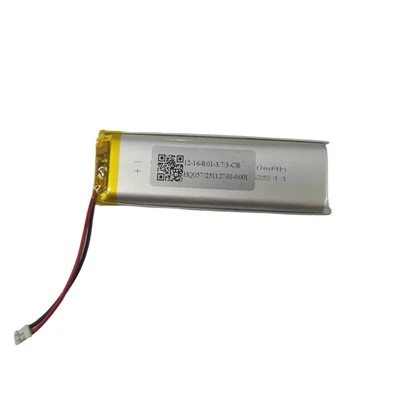
If you’re shopping around for LMO batteries and want to talk about how to make sure they hold up in your specific environment—whether it’s a workshop, an e-bike fleet, or outdoor equipment—hit us up. We can send you test data, talk through your use case, and put together a solution that’s both high-performing and built to resist corrosion. Don’t hesitate to reach out to start a conversation.
LMO Lithium Battery References:
- Tarascon, J. M., & Armand, M. (2001). Issues and challenges facing rechargeable lithium batteries. Nature.
- Liu, J., et al. (2015). Manganese dissolution and mitigation strategies in lithium-ion batteries with spinel LiMn2O4 cathodes. Journal of Power Sources.
- Zhang, X., et al. (2020). Corrosion resistance of aluminum current collectors in lithium-ion battery electrolytes with functional additives. Electrochimica Acta.
- Chen, Y., et al. (2022). Advanced LMO cathode designs for enhanced cycle life and corrosion resistance in harsh environments. Journal of The Electrochemical Society.
Suzhou Huaqian Contemporary New Energy Technology Co., Ltd.
As one of the most professional lmo lithium battery manufacturers and suppliers in China, we warmly welcome you to wholesale bulk customized lmo lithium battery at competitive price from our factory. If you have any enquiry about cooperation, please feel free to email us.
Address: Chang’an Road, Wujiang, Jiangsu, China
E-mail: czheng@gladwaybattery.com
WebSite: https://www.gladwaybattery.com/
