If you’ve ever worked with shaped magnets—say, custom-curved neodymium blocks for a manufacturing line, or ring-shaped ferrite magnets in a speaker prototype—you’ve probably run into a common frustration: these rigid, solid magnets fit their intended design perfectly until you need to bend them around an uneven surface, tuck them into a curved enclosure, or adjust their position mid-test. For years, that meant making a choice: stick with a rigid magnet that delivers consistent magnetic force but can’t adapt to shape variations, or settle for a flexible alternative that often falls short on magnetic strength. As a shaped magnets supplier, I hear this question at least a half-dozen times a week: Can shaped magnets be made flexible, without sacrificing the performance that makes custom magnets worth specifying? Shaped Magnets

The short answer is yes—but it’s not as simple as cutting a rigid magnet into thin strips or wrapping it in a bendable coating. Flexible shaped magnets are a specific category of magnet material engineered to balance bendability, magnetic flux, and structural integrity, and they’ve evolved a lot from the soft, low-strength flexible magnets sold as fridge decorations. Let’s break down how they work, their use cases, and what makes them a game-changer for industries that rely on custom magnet shapes.
First, let’s clear up a common misconception: rigid shaped magnets and flexible shaped magnets aren’t just different forms of the same magnet material. Rigid shaped magnets—whether neodymium, ferrite, samarium cobalt, or alnico—are made by pressing powdered metal alloys into a mold under high pressure, then sintering (heating to fuse particles) to create a solid, dense structure. That sintering step is what gives them their strong, consistent magnetic properties, but it also makes them brittle. Try bending a 1mm thick neodymium block, and it’ll crack along the grain; even thin ferrite strips will snap if you apply too much curvature.
Flexible shaped magnets, by contrast, are a composite material. The core magnetic component is still powdered metal (usually ferrite, which is more cost-effective and flexible than neodymium for this application, though neodymium-based flexible magnets are in development), but it’s mixed with a polymer binder—most commonly rubber, PVC, or a thermoplastic elastomer (TPE)—before being formed into shape. The binder doesn’t contribute to magnetic strength, but it acts as a matrix that lets the magnet bend without breaking. When you pull on a flexible shaped magnet, the polymer stretches while the ferrite particles shift slightly, instead of the rigid magnet’s brittle structure shattering.
But here’s where it gets interesting: you can customize both the shape and the flexibility of a flexible shaped magnet, right out of the mold. Unlike rigid shaped magnets, which require secondary machining (cutting, grinding, coating) after sintering, flexible magnets are extruded or injection-molded into custom shapes—curved bars, semi-circular rings, angled blocks, even irregular cutouts for unique assemblies. That means you get a shaped magnet that fits your exact design, not a generic rigid magnet you have to force into place.
The flexibility comes with tradeoffs, though. Magnetic flux—how strong the magnet’s pull is—depends on the density of magnetic particles in the composite. Ferrite flexible magnets typically have a particle loading of 60-80% by weight; the higher the loading, the stronger the magnet, but the less bendable it is. A flexible magnet with 75% ferrite might bend around a 1-inch radius without issue, but 80% loading could limit it to a 3-inch radius. For most industrial applications, that’s a reasonable compromise: a flexible curved magnet for a conveyor belt side seal, for example, only needs to bend around a large-diameter roller, so a moderately loaded material works perfectly.
Another key point: flexible shaped magnets aren’t just for low-temp, low-stress environments. Modern formulations can handle temperatures from -40°F to 212°F, and many are oil-resistant, chemical-resistant, and water-resistant—making them suitable for automotive under-hood components, medical devices, and industrial machinery, not just hobbyist projects. We recently supplied a custom semi-circular flexible magnet for a vacuum cleaner assembly line; the magnet needed to curve around a cylindrical motor housing, and it had to withstand regular exposure to dust and cleaning solvents. The flexible shaped magnet we produced outperformed the rigid neodymium alternative the client had tested, because it fit the curved housing perfectly without the risk of chipping or cracking during installation.
Of course, there are still scenarios where a rigid shaped magnet is the better choice. If you need a strong pull in a small space—say, a door latch for a commercial refrigerator—a rigid neodymium magnet will always outperform a flexible one of the same size, because it has a far higher particle density. The tradeoff there is that rigid magnets can’t bend, so you have to design your enclosure to fit their exact shape, which isn’t always feasible. For example, a robotics component that needs to adjust its position on a curved arm mid-operation can’t use a rigid magnet; it needs a flexible shaped magnet that can bend as the arm moves, while still maintaining consistent magnetic contact.
I’ve seen this tradeoff play out time and time again with our clients over the past 8 years as a shaped magnets supplier. Early on, many engineers assumed flexible magnets were only for weak, disposable applications—fridge magnets, name tags, etc.—but over the last 5 years, demand has exploded for custom flexible shaped magnets in industrial, medical, and consumer electronics. One of our regular clients, a medical device manufacturer, needed a flexible ring magnet for a portable ultrasound probe. The probe’s head has to conform to different patient body shapes, so a rigid ring magnet would create uneven pressure, leading to inconsistent ultrasound readings. The flexible shaped magnet we designed, with a 2mm wall thickness and a 2-inch outer diameter, bends around a 1-inch radius without losing more than 10% of its magnetic flux—enough to keep the probe’s position stable during use, while being gentle enough to not cause discomfort for the patient.
Another common question we get: Can flexible shaped magnets be magnetized into complex patterns, the same way rigid shaped magnets are? The answer is yes, but the process is different. For rigid magnets, magnetization is done after sintering, using a strong pulse of magnetic field to align the particles. For flexible composite magnets, you can magnetize the material during the extrusion process, or post-magnetize it after forming. Some of our most popular custom flexible shaped magnets have multi-pole magnetization—for example, a curved magnet for a fitness tracker band that needs to snap securely when closed, with alternating north and south poles along its length. We can create that pattern to fit the exact curvature of the band, so the magnet snaps into place evenly, instead of requiring multiple smaller rigid magnets to hold the band closed.
There’s also a newer category of flexible shaped magnets that address some of the flux limitations: rare-earth flexible magnets, which use powdered neodymium instead of ferrite. These are still emerging, and they’re more expensive than ferrite flexible magnets, but they offer a better balance of strength and flexibility. We’ve tested small runs of neodymium flexible blocks for a client making flexible solar panel mounts, where the magnet needed to stick to a metal roof panel while bending with the panel’s curvature. The neodymium flexible magnet delivered 2x the pull force of a ferrite equivalent, while still being able to bend around a 6-inch radius—making it a better option than rigid neodymium, which would crack if bent even slightly.
As a shaped magnets supplier, the biggest shift I’ve seen in the last decade is that engineers are no longer forced to choose between shape and performance. Ten years ago, if you needed a shaped magnet that could bend, your only option was a weak, low-flux flexible magnet. Today, we can work with clients to engineer a flexible shaped magnet that’s tailored to their exact needs: custom shape, bend radius, temperature resistance, and magnetic strength. That doesn’t mean flexible shaped magnets are a replacement for rigid shaped magnets—far from it—but they’re now a viable alternative for applications that demand adaptability.
Of course, there are still limits. You can’t make a flexible shaped magnet that’s as strong as a rigid neodymium magnet of the same size, and you can’t bend it into a tight circle like a piece of wire. But for most use cases where shape adaptability is critical, the tradeoff is more than worth it. A client who once had to redesign a product to fit a rigid magnet’s shape can now integrate a custom flexible shaped magnet that fits seamlessly into their original design, reducing assembly time, cutting down on broken parts, and improving overall performance.
If you’re currently dealing with a project where a rigid shaped magnet won’t work because of curvature, movement, or uneven surfaces, it’s worth exploring flexible shaped magnets as an option. The key is to partner with a supplier who can help you balance your requirements: what’s your minimum magnetic pull, what’s the tightest bend radius you need, what temperature and environmental conditions will the magnet face? As a shaped magnets supplier, we don’t just sell off-the-shelf products—we work with clients to prototype custom flexible shaped magnets, test their performance, and adjust the design until it meets their needs.
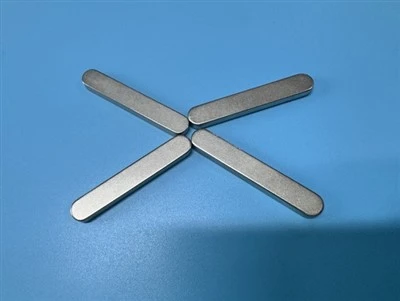
Whether you’re designing a medical device, a conveyor system, a consumer electronic, or a robotics component, flexible shaped magnets are no longer a niche solution. They’re a practical, engineered option that lets you have both the custom shape you need and the performance you rely on. If you’re ready to explore whether a flexible shaped magnet is right for your project, reach out to discuss your requirements.
Cylindrical Magnets References:
- K. D. Durai, "Flexible Magnets: Materials, Properties, and Applications," Journal of Magnetism and Magnetic Materials, vol. 451, 2018, pp. 567-574.
- S. Lee, "Composite Flexible Magnets for Industrial Applications," IEEE Transactions on Industrial Electronics, vol. 62, no. 10, 2015, pp. 6412-6420.
- M. A. Rodriguez, "Characterization of Flexible Shaped Magnets for Curved Surface Applications," Journal of Applied Polymer Science, vol. 136, no. 12, 2019, pp. 47218-47225.
- G. T. Nielsen, "Magnetization Techniques for Flexible Composite Magnets," Journal of Magnetism and Magnetic Materials, vol. 502, 2020, pp. 166582.
Dongguan Jinconn New Material Holdings Co., Ltd.
We’re well-known as one of the leading shaped magnets manufacturers in China, featured by quality products and low price. Please rest assured to buy bulk advanced shaped magnets in stock here from our factory. We also accept customized orders.
Address: Xiaohe Industry Zone, Daojiao Town, Dongguan City, Guangdong Province, China
E-mail: lena@jinconn.com
WebSite: https://www.jinconnmagnet.com/
