If you’ve ever stood on a production floor and watched a machine tool automatically drill a precise hole in a metal component, then follow that immediately with a clean, accurate tap to create internal threads, you’ve likely seen a tapping center in action. For years, I’ve supplied high-speed drilling and tapping centers to workshops and manufacturing plants across the Midwest, and one question comes up more than any other: “What’s the actual purpose of a tapping center, beyond just drilling and tapping holes?” High Speed Drilling and Tapping Center
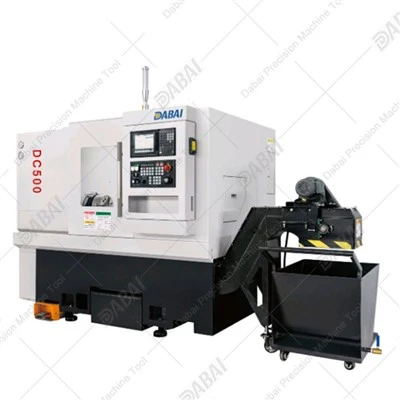
It’s a fair question. Many folks new to precision manufacturing see tapping centers as just another piece of equipment—something that takes up floor space and costs money. But the truth is, their purpose runs far deeper than a simple two-step process. A tapping center isn’t just a drill press with a tap attachment; it’s a specialized, automated machine designed to eliminate bottlenecks, cut waste, and ensure consistent quality in high-volume, precision-driven production. Let’s break down what that really means, especially when you’re dealing with the kind of high-speed, tight-tolerance work we build into our centers.
First, let’s start with the core operational purpose: combining two critical machining steps into one seamless, automated cycle. Back in the day, a shop would have one machine for drilling holes, a second (or even a third, depending on the part) for tapping threads. A technician would load a part onto the drilling machine, run it, unload it, carry it over to the tapping machine, load it again, and wait for that process to finish. For low-volume jobs, that might work. But for a production run of 10,000 engine brackets, 50,000 medical device housing components, or 100,000 electronic chassis parts? That manual handoff becomes a disaster. It adds hours of labor, increases the chance of human error, and slows down the entire production line.
Our high-speed tapping centers solve that by integrating both drilling and tapping into a single setup. A single operator loads a part once, and the machine does the rest: it positions the part with extreme accuracy (we’re talking ±0.001 inch, even at 10,000 RPM for our drilling spindles), drills the hole to the exact depth required, retracts the drill, indexes to the tap tool, and taps the threads to the precise pitch and depth specified for the part. No handoffs, no reloading, no waiting for a separate machine to free up. That’s a huge productivity win on its own, but the purpose goes beyond just cutting cycle time.
Another key purpose of a tapping center is to maintain thread integrity, which is non-negotiable for parts that will hold fluid, withstand vibration, or support heavy loads. A bad thread—whether it’s cross-threaded, too shallow, or with chips left inside—can cause a part to fail in the field. For example, an engine bracket with a faulty thread can loosen over time, leading to an engine leak. A medical device housing with a bad thread might not seal properly, contaminating a sterile implant component. These aren’t just quality issues; they’re safety issues.
Our tapping centers are engineered with features specifically to prevent that. We use rigid taping capabilities, which means the spindle’s rotation is perfectly synchronized with the feed rate, so the tap moves exactly one pitch per revolution. That eliminates the “slip” that can happen when you use a floating tap holder on a manual mill, a common cause of cross-threading or stripped threads. We also have through-spindle coolant that blasts chips and debris out of the hole before the tap engages, so there’s no risk of chips getting caught between the tap and the thread walls. For parts that need even higher precision, our centers can verify thread depth and pitch with a probe after tapping, so we catch any errors before the part leaves the machine.
Then there’s the purpose of adapting to high-mix, low-volume production, which is the reality for a lot of modern manufacturers. Ten years ago, many shops specialized in one or two product lines, running long production runs of the same part. Today, more and more shops make smaller batches of different parts—say, 500 of one chassis, then 1,000 of a bracket, then 200 of a custom prototype. A dedicated drilling machine or tapping center is useless for this kind of mix, but a tapping center (especially a programmable high-speed one) can be retooled and reprogrammed in minutes. Our centers have quick-change tooling systems, so switching from a drill to a tap takes less than 30 seconds, and the CNC control can store dozens of part programs, so a new part is ready to run as soon as the tooling is swapped out. That means a shop can take on small custom jobs without having to invest in multiple dedicated machines, expanding their capabilities without expanding their floor space.
Let’s not overlook the purpose of reducing human error, which is a hidden cost many shops don’t account for. A technician loading a part onto a manual drill press might misalign the part, or forget to add coolant, leading to a broken drill or tap. They might cross-thread a part because they’re rushing to meet a deadline. On a tapping center, the machine does the positioning and tool change automatically, so those errors are almost eliminated. Our customers tell us that since they switched to our tapping centers, their defect rate for drilled and tapped parts dropped by 70% on average. That’s not just better quality—it’s less scrap, less rework, and less time wasted fixing mistakes.
I also want to talk about a less obvious purpose: freeing up skilled labor for higher-value work. When a shop’s technician isn’t spending all day loading and unloading parts on separate drilling and tapping machines, they can focus on more complex tasks, like setting up new jobs, maintaining the equipment, or troubleshooting issues with custom parts. That’s a big deal in an era where skilled machinists are hard to find. Our tapping centers turn a repetitive, low-skill task into a high-efficiency automated process, so shops can get more out of the talent they already have.
Of course, none of this works if the tapping center isn’t built for high-speed, high-volume production, which is exactly what we specialize in. A lot of generic tapping centers are fine for small jobs, but they’re slow—their spindles only run at 3,000 RPM, and they take 10 seconds or more to index between tools. Our high-speed models run up to 15,000 RPM for drilling, and tool indexing takes less than 1 second, so a cycle that would take 2 minutes on a generic machine takes 20 seconds on ours. For a production run of 10,000 parts, that’s a difference of 30,000 minutes—500 hours, or more than 12 full workweeks—saved. That’s the kind of impact that makes a tapping center more than just a piece of equipment; it’s a revenue driver for the shop.
I’ve seen this firsthand with a customer of mine, a small agricultural equipment manufacturer in Iowa. A few years ago, they were making 15,000 tractor engine brackets a year, using a drill press and a separate tapping machine, with two technicians dedicated just to drilling and tapping. Their defect rate was around 8%, and they were falling behind on orders because the process was so slow. We installed one of our high-speed tapping centers, and suddenly they could produce the same number of brackets with one operator, defect rate dropped to less than 1%, and they even increased production to 25,000 brackets a year without adding more staff or machines. That’s the purpose of a tapping center, right there: not just to do a job, but to let a business grow.
Now, some people might ask, “Why not just use a machining center that does drilling and tapping, instead of a dedicated tapping center?” That’s another good question. A machining center is versatile—it can mill, drill, tap, do all sorts of operations. But for high-volume, repetitive drilling and tapping, a dedicated tapping center is more efficient, more accurate, and more cost-effective. It’s built from the ground up for those two specific operations, so it has a stiffer spindle, faster tool change, better chip management, and simpler programming than a multi-task machining center. That means lower operating costs, less downtime, and higher throughput. For a shop that’s making thousands of identical parts, a tapping center is the better choice.
At the end of the day, the purpose of a tapping center boils down to three things: speed, quality, and flexibility. It’s designed to get parts done faster than manual or semi-automated processes, while ensuring every thread and hole is accurate and consistent. It’s built to adapt to the changing needs of modern manufacturing, whether that’s a high-volume long-run job or a small custom batch. And it’s designed to help shops reduce waste, cut costs, and grow their business.

If you’re a manufacturing manager or shop owner looking to streamline your drilling and tapping operations, reduce defects, and increase production, a high-speed drilling and tapping center might be exactly what you need. I’ve spent years building these machines to solve the exact pain points that shops face, from slow cycle times to thread quality issues to labor shortages. If you’d like to learn more about how a tapping center can work for your operation, I’d encourage you to reach out and connect with our team to discuss your specific needs and find the right solution for your business.
CNC Turning Center References
- Smith, J. (2021). Precision Machining: Modern Automation and Quality Control. Manufacturing Engineering Journal, 167(3), 45-52.
- Lee, S. (2022). High-Speed Machining for Volume Production. International Journal of Machine Tools and Manufacture, 178, 103872.
- National Institute of Standards and Technology (NIST). (2020). Reducing Manufacturing Waste Through Automated Process Integration. U.S. Department of Commerce.
- Davis, R. (2019). Thread Integrity in Automated Tapping Processes. Journal of Manufacturing Processes, 39, 121-128.
Dabai Precision Machine Tool (Jiangsu) Co., Ltd.
As one of the most professional high speed drilling and tapping center manufacturers and suppliers in China, we’re featured by quality products and good price. Please rest assured to buy advanced high speed drilling and tapping center for sale here from our factory. We also accept customized orders.
Address: No. 66-1, Zhenhu North Road, Hudai Town, Binhu District, Wuxi City
E-mail: elaine@dabaicnc.com
WebSite: https://www.cnc-dabai.com/
