Hey there, ever wonder why that 2L soda bottle you grab from the grocery store looks so smooth, no lopsided bulges, and fits perfectly on the shelf? Or why the shampoo bottle you squeeze doesn’t crumple when you empty it? A lot of people think it’s just good plastic, but if you work with blow molding molds like I do, you know the real magic happens way before that bottle hits the conveyor: it’s all about parison control. Blow Molding Mold
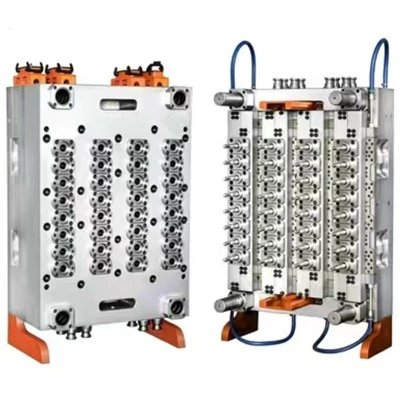
I’ve been in the blow molding mold game for 12 years now. I didn’t start here—first I was on the shop floor running old machines, watching guys tweak valves and cross their fingers, and that’s when I realized most folks (even a few mold operators) don’t get what parison control actually is, beyond just “making the plastic tube.” It’s not rocket science, but skip getting this right, and you’re throwing away 20% of your production before you even hit the blow station. I’ve seen it: a shop that cuts corners on parison control ends up with a batch of 500 defective containers, all because the plastic tube wasn’t the right thickness in the right spots. Let’s break this down like I’d explain it to a new operator on my team—no fancy jargon that makes you zone out.
First, let’s define the basics, real quick, because you need the lay of the land. Blow molding makes hollow plastic parts, right? The first step after melting plastic resin (usually HDPE, PP, PET for bottles, jerrycans, even small automotive parts) is extruding that melted plastic through a die. The thing you get when that plastic comes out is called a parison—think of it as a squishy, hot plastic tube, like a really thick, wet spaghetti that’s still soft enough to blow up. That parison hangs down, right? Until you clamp it between two half molds, then you shoot air into it to stretch it to match the mold shape.
Parison control is exactly what it sounds like: managing that hot plastic tube as it extrudes, so its wall thickness is perfect everywhere, no thin spots or thick spots. Here’s why that’s non-negotiable. If the parison is too thin at the bottom, that 2L bottle will blow out lumpy there, and when you fill it with soda, it’ll bulge like a balloon. Too thin at the neck? That’s the part that screws on the cap—thin enough there, and it’ll crack when you twist the cap on, or leak. Too thick, and you’re wasting plastic (which means extra material cost, that’s money out of your pocket) and the part will be too heavy, which is a pain for shipping. For bigger stuff, like a 5-gallon water jug, get parison control wrong, and the jug will collapse a little when you stack them, or hold too much air when you test pressure, failing quality checks.
Wait, you might be thinking—can’t you just adjust the die to make the whole tube thicker? No way. Because the parison is hanging, gravity is pulling it down. If you just set the die to make a thick tube all around, the bottom end will get super heavy, stretch thin, and the top will be way too thick. It’s like squeezing a tube of toothpaste at the top—all the toothpaste goes to the bottom, leaving the top thin. Same exact principle here. That’s why a one-size-fits-all thick parison doesn’t work; you need to tweak the thickness as it extrudes, from top to bottom, to fight gravity and make sure every part of the tube is the right width.
Now, let’s talk about how we actually control that parison, because this is where our work as a blow molding mold supplier comes in. There are two main types of parison control that most shops use, and each is tied directly to how we design and build molds for our customers.
First, there’s gravity-compensated parison control, which is the older, simpler setup. With this, you have a tool called a mandrel inside the die—think of it as a metal rod that sits in the center of the die. You can adjust the gap between the mandrel and the die wall as the parison extrudes, right before it hangs. Since gravity pulls plastic down, you make the gap smaller at the bottom of the parison (so you put less plastic there, to counteract the pull) and slightly wider at the top. This works fine for simple parts, like straight-sided soda bottles, if you set it right. But here’s the catch: it’s not adjustable on the fly while the machine is running. If you need to tweak for a new batch, you have to stop the line, mess with the die, which adds downtime. For small runs, or shops that only make a few different parts, that’s manageable, but if you’re running 24/7, switching parts every few hours, that’s a nightmare.
That’s why most of our high-volume customers go with the other option: multistage parison control, sometimes called sequential parison control. This is the big one now, and it’s what we design into our molds for clients making more complex parts, like automotive fuel tanks, laundry detergent jugs that have a indent for the handle, or narrow-neck cosmetic bottles. Here, the die has multiple segments around the circumference, each with its own tiny valve or actuator that can adjust the gap independently. So if your bottle has a handle, you can make the parison thicker at the spot where the handle will blow out (that spot needs extra strength to hold the weight of a full detergent jug) and thinner on the flat sides that won’t see as much stress. It’s like having 20 tiny hands adjusting different parts of the tube at the same time, all while the machine is running. That cuts down on defects, reduces plastic waste, and makes the part way more consistent.
I’ve got a customer out in Ohio who makes 5-gallon polypropylene water jugs—they were using an old gravity setup, and their defect rate was around 8%. That meant throwing away 40 out of every 500 jugs, plus spending extra on overtime fixing rejects. We swapped their mold over to a multistage parison control die we designed, and their defect rate dropped to 1.5%. That’s not just a win for them; that’s $12,000 a year back in their pocket, just from less wasted plastic. I didn’t make up those numbers, either—we track every customer’s results, and that’s exactly what happened there.
Wait, but here’s a common mistake I see shops make: thinking parison control is just the die. No—your mold design is equally important, because the parison’s thickness directly interacts with how the blow station forms the part. Let’s say you have a mold with a really deep section, like the base of a 2L bottle. If the parison isn’t thick enough in that deep spot, when you blow air, the plastic will stretch too thin there, leading to weak spots. We always work with our customers to adjust parison profiles during the mold testing phase—we’ll run a small batch of prototypes, measure the wall thickness with a gauge (the same one I used to hold as a new operator), tweak the die controls, and adjust the mold’s core pin to make sure the plastic flows where it needs to when it blows. It’s a collaboration, not just “I build the mold, you run it.”
Another thing a lot of new operators don’t get: parison control also affects cycle time. If you have a parison that’s the right thickness, the blow process is faster, because the plastic stretches evenly, no thin spots that take longer to blow. If you’re running 1,000 parts an hour, cutting 10 seconds off each cycle adds up to 80 extra parts an hour, which is a huge gain for high-volume production. I once had a customer who was running 20,000 automotive parts a week, and they were losing 2 hours a day to mold tweaks because their parison control was off. We redesigned their parison control system, and they got that 2 hours back every single day. That’s 10 extra hours of production a week—for them, that’s $35,000 in extra output a month. No joke, I still get an email from their plant manager every few months saying thanks for that.
Now, let’s talk about what to look for if you’re shopping for a blow molding mold, specifically around parison control. A lot of mold companies will tell you they “have parison control,” but dig deeper. Ask: is it manual or automated? Manual is fine for small runs, but if you’re running high volume, automated is non-negotiable. How many segments does the control system have? More segments = more precision, especially for complex parts. Do you offer on-site testing and adjustment? Because a parison control setup that works in our shop might need tiny tweaks for your specific resin blend—different plastics (HDPE vs. PET vs. PP) melt differently, so they extrude differently, and that affects how the parison behaves.
I also want to bust a myth I hear all the time: parison control is only for big shops. No, even a small business making custom plastic parts can benefit. I worked with a guy who makes custom outdoor planters, 1-gallon and 5-gallon sizes. He was hand-adjusting his old die, and he’d get 2 defective planters per batch of 50. We built him a small, 6-segment automated parison control system that fits his existing machine, and now his defect rate is zero. He says he saves $1,500 a month on plastic waste, which is a huge deal for a small operation. It doesn’t have to be a huge investment—we tailor every setup to the customer’s production volume, not just our standard big-mold designs.
Wait, what about common issues you might run into with bad parison control? Let’s list them out so you know what to watch for. First, uneven wall thickness: as I mentioned, that leads to bulge on the bottle, cracked caps, parts that don’t stack right. Second, excessive flash: flash is that extra plastic that oozes out between the mold halves. If your parison is too thick, or uneven, you’ll get extra flash, which means more trimming time, more waste. Third, inconsistent part weight: parison control makes every part weigh the same, which is super important for customers who sell by volume—you don’t want to sell a 2L soda that’s only 1.8L, right? That’s why major beverage brands test every part’s weight, and bad parison control is the #1 reason for weight fluctuations.
Let me wrap this up with what I’ve learned over the years, because this isn’t just technical stuff—this is about making parts that work for real people. Parison control isn’t some hidden trick only mold engineers know. It’s the backbone of consistent, efficient blow molding. Skip it, and you’re wasting money, throwing away parts, and frustrating your team. Get it right, and you’ll have less downtime, less waste, and better products that your customers actually want.

At the end of the day, I’m not just selling molds—I’m solving problems. If you’re tired of dealing with defective parts, high plastic waste, or constant mold tweaks because your parison control isn’t cutting it, let’s chat. I can walk you through what setup would work best for your production, show you examples of customers I’ve helped, and even come out to your shop to look at your current system if you want. No sales pitch, no pressure—just real advice from someone who’s been doing this for way too long, and knows parison control inside and out.
Mold Accessories References
- Rosato, D. V., & Rosato, M. G. (2000). Blow Molding Handbook (3rd ed.). Carl Hanser Verlag.
- Harper, C. A. (2002). Modern Plastics Handbook. McGraw-Hill.
- Boothroyd, G., Knight, W. A., & Reddy, B. S. (2011). Product Design for Manufacture and Assembly (3rd ed.). CRC Press.
- Society of the Plastics Industry (SPI). (2018). Blow Molding Process Guidelines.
Taizhou Leizhen Mold Co., Ltd.
Taizhou Leizhen Mold Co., Ltd. is one of the most professional blow molding mold manufacturers and suppliers in China, also supports customized service with low price. Please feel free to buy CE approved blow molding mold made in China here from our factory. Contact us for pricelist.
Address: No.8828, Changtang Industrial Zone, Beicheng Street, Huangyan District, Taizhou City, Zhejiang Province
E-mail: ningleizhen@gmail.com
WebSite: https://www.leizhenmold.com/
