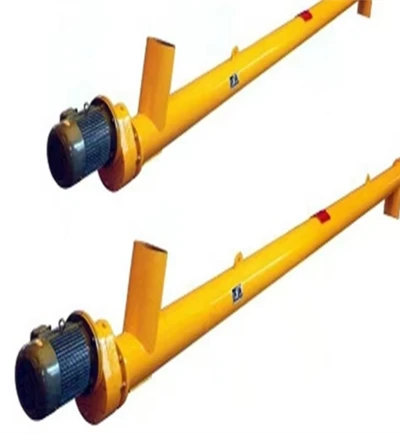
Hey there! I’m a supplier of the AAC (Autoclaved Aerated Concrete) Raw Material Handling System. Today, I wanna chat about the protocols for data transfer in the control system of our AAC Raw Material Handling System. AAC Raw Material Handling System
First off, let’s understand why data transfer protocols are so important. In an AAC Raw Material Handling System, there are tons of sensors, actuators, and control devices. These components need to communicate with each other to ensure the smooth operation of the whole system. For example, sensors measure the level of raw materials in silos, the flow rate of materials in conveyors, and the temperature and pressure in various parts of the process. This data needs to be sent to the control system, which then makes decisions and sends commands back to the actuators to adjust the operation.
One of the most commonly used protocols in our system is Modbus. Modbus is a simple and reliable protocol that’s been around for a long time. It uses a master – slave architecture. In our AAC system, the control unit acts as the master, and all the connected devices like sensors and actuators are the slaves. The master sends requests to the slaves to read or write data. For instance, if we want to know the current level of cement in a silo, the control unit (master) will send a request to the level sensor (slave) using the Modbus protocol. The sensor then responds with the relevant data.
The great thing about Modbus is its simplicity. It’s easy to implement and understand, even for those who are new to industrial automation. Also, it’s very flexible and can be used over different communication media, such as serial cables and Ethernet. In our AAC Raw Material Handling System, we often use Modbus over Ethernet. This allows for faster data transfer and better integration with other network – based systems.
Another protocol we use is Profibus. Profibus is a fieldbus protocol that’s widely adopted in industrial automation. It offers high – speed data transfer and is very reliable. In our AAC system, Profibus is mainly used for communication between the control system and the distributed I/O modules. The distributed I/O modules are located close to the sensors and actuators in the field. They collect data from the sensors and send it to the control system via Profibus. And when the control system needs to send commands to the actuators, it does so through these I/O modules using the Profibus protocol.
Profibus has different types, like Profibus DP (Decentralized Peripherals) which is optimized for fast communication with decentralized devices. It’s really great for our AAC Raw Material Handling System because it can handle a large number of I/O points efficiently. This means we can have a lot of sensors and actuators connected to the system without any significant communication delays.
CAN (Controller Area Network) is also an important protocol in our AAC system. CAN is a serial communication protocol that’s known for its robustness. It was originally developed for the automotive industry, but it’s now widely used in industrial applications as well. In our AAC Raw Material Handling System, CAN is used for communication between some of the critical components, especially those that require high – reliability data transfer.
For example, in the weighing systems of our raw material handling, CAN is used to transfer the weight data accurately from the load cells to the control system. The CAN protocol has built – in error – detection and correction mechanisms, which ensures that the data is transferred correctly. If there’s an error in the data transfer, the protocol can detect it and request re – transmission.
When it comes to implementing these protocols in our AAC Raw Material Handling System, we use a combination of hardware and software. The hardware includes communication modules that support these protocols. For example, we have Modbus communication modules that can be connected to the sensors and actuators. These modules convert the data into the Modbus format and send it over the network.
On the software side, we use programming languages like ladder logic and structured text. These programming languages allow us to write the control programs that handle the data transfer and processing. For instance, we can write a ladder logic program in the control system to read the data from the sensors using the Modbus protocol, process it, and then send the appropriate commands to the actuators.
Now, let’s talk about the challenges we face with data transfer protocols in our AAC system. One of the main challenges is interference. In an industrial environment like an AAC production plant, there are a lot of electrical and magnetic fields. These fields can interfere with the data transfer, causing errors in the data. To overcome this, we use shielded cables for communication. Shielded cables can protect the data signals from external interference.
Another challenge is compatibility. Different devices in our AAC system may support different protocols. For example, some older sensors may only support Modbus RTU (a serial version of Modbus), while newer devices support Modbus TCP/IP (an Ethernet – based version of Modbus). We need to make sure that all the devices can communicate with each other effectively. To do this, we use protocol converters. A protocol converter can convert the data from one protocol to another, allowing devices with different protocol support to communicate.
In addition to these technical challenges, there are also security concerns. As our AAC system becomes more connected to the network, the risk of cyber – attacks increases. We need to ensure that the data transfer is secure. We use techniques like encryption to protect the data during transfer. Encryption scrambles the data so that even if it’s intercepted, it can’t be read by unauthorized parties.
So, that’s a pretty good overview of the data transfer protocols in our AAC Raw Material Handling System. With the right protocols and proper implementation, we can ensure the efficient and reliable operation of our system.
If you’re in the market for an AAC Raw Material Handling System, or if you have any questions about the data transfer protocols or any other aspects of our system, don’t hesitate to reach out to us. We’re always here to help with your procurement needs.
AAC Turning Cutting System References:
- Kunz, Andreas. "Modbus: The Complete Reference Guide." CRC Press, 2014.
- Profibus Nutzerorganisation e.V. "Profibus and Profinet: The World – Wide Standard for Automation." 2018.
- Bosch, Robert. "CAN Specification." 2012.
Qingzhou Shuangfengda Machinery Engineering Co., Ltd.
As one of the most professional AAC raw material handling system manufacturers and suppliers in China, we’re featured by quality products and good price. Please rest assured to buy durable AAC raw material handling system for sale here from our factory. Customized orders are welcome.
Address: Gaojiazhuang Village, Gaoliu Town, Qingzhou City, Shandong Province
E-mail: lenhond@163.com
WebSite: https://www.sfdmachinery.com/
