Can a water cooled condenser be used in a marine environment? Water Cooled Condenser
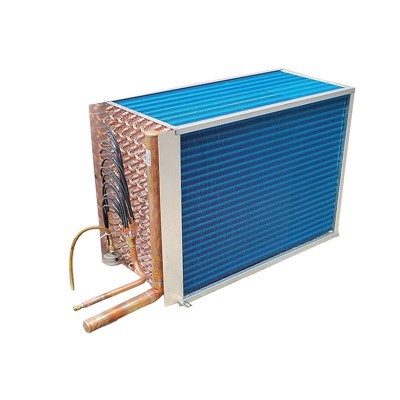
As a provider of water cooled condensers, I am often asked about the feasibility of using our products in a marine environment. It’s a question that goes to the heart of the compatibility between a well – established industrial cooling technology and the unique challenges posed by the sea.
Understanding Water Cooled Condensers
Before delving into the suitability for marine settings, it’s essential to understand how water cooled condensers operate. A water cooled condenser is a device used in refrigeration and air – conditioning systems to transfer heat from the refrigerant to the cooling water. The refrigerant enters the condenser in a high – pressure, high – temperature vapor state. As it passes through the condenser tubes, the cooling water flowing around these tubes absorbs the heat from the refrigerant, causing it to condense back into a liquid state. This heat exchange process is crucial for the proper functioning of the overall system, ensuring efficient cooling and operation.
Challenges of the Marine Environment
The marine environment presents a set of challenges that are distinct from those in typical industrial or commercial settings.
Corrosion
One of the most significant challenges is corrosion. Seawater is a highly corrosive medium due to its high salt content. Metals commonly used in condenser construction, such as copper, steel, and aluminum, are susceptible to corrosion when exposed to seawater. Corrosion can lead to the degradation of the condenser tubes, reducing their heat transfer efficiency over time. Pitting corrosion, in particular, can cause holes in the tubes, leading to leaks of refrigerant or cooling water. This not only affects the performance of the condenser but can also lead to system failures and costly repairs.
Biofouling
Biofouling is another major concern. The marine environment is teeming with various microorganisms, algae, and small marine organisms. These organisms can attach themselves to the surfaces of the condenser tubes, forming a layer of biofilm. This biofilm acts as an insulating layer, reducing the heat transfer coefficient between the refrigerant and the cooling water. As a result, the condenser has to work harder to achieve the same level of heat transfer, leading to increased energy consumption and reduced efficiency.
Vibration and Shock
Boats and ships are subject to constant vibration and shock due to the movement of the vessel through the water, engine operation, and rough seas. These mechanical forces can cause stress on the condenser components, especially the tube – to – tube sheet joints. Over time, this can lead to mechanical failures, such as tube breaks or leaks at the joints.
Adaptations for the Marine Environment
Despite these challenges, water cooled condensers can be successfully used in the marine environment with appropriate adaptations.
Material Selection
Choosing the right materials is crucial to combat corrosion. For example, stainless steel is a popular choice for condenser tubes and casings in marine applications. Stainless steel has excellent corrosion resistance properties due to the presence of chromium, which forms a passive oxide layer on the surface of the metal, protecting it from further corrosion. Titanium is another high – performance material that offers superior corrosion resistance, even in the most aggressive seawater conditions. Although titanium is more expensive than stainless steel, its long – term durability and reliability can make it a cost – effective choice in the long run.
Anti – fouling Systems
To address the issue of biofouling, various anti – fouling systems can be employed. One common approach is the use of chemical treatments. Chemicals such as chlorine or non – oxidizing biocides can be added to the cooling water to kill or inhibit the growth of microorganisms. However, this method requires careful management to ensure that the chemicals do not cause additional corrosion or environmental problems. Another option is the use of physical anti – fouling methods, such as ultrasonic or electromagnetic systems. These systems work by generating ultrasonic waves or electromagnetic fields that prevent the attachment of organisms to the tube surfaces.
Structural Design
In terms of structural design, condensers for marine use need to be more robust to withstand vibration and shock. Reinforced tube – to – tube sheet joints, for example, can be used to improve the mechanical integrity of the condenser. Additionally, the condenser can be mounted on shock – absorbing mounts to reduce the impact of vibrations on the equipment.
Benefits of Using Water Cooled Condensers in the Marine Environment
Despite the challenges and the need for adaptations, there are significant benefits to using water cooled condensers in the marine environment.
High Heat Transfer Efficiency
Water cooled condensers generally offer higher heat transfer efficiency compared to air – cooled condensers. In a marine environment, where a large amount of cooling water is readily available, this high efficiency can be fully exploited. The continuous flow of seawater provides a constant and effective heat sink, allowing the condenser to transfer heat more quickly and efficiently. This results in lower operating temperatures for the refrigeration or air – conditioning system, which in turn can improve the overall performance and reliability of the system.
Space – Saving
In the limited space available on boats and ships, water cooled condensers can be a more space – saving option compared to air – cooled condensers. Air – cooled condensers require large fans and a significant amount of air circulation space, which can be a challenge to accommodate in a marine setting. Water cooled condensers, on the other hand, can be more compact and can be installed in a more flexible manner, making them a better fit for the confined spaces on board vessels.
Case Studies
There are numerous successful applications of water cooled condensers in the marine industry. For example, in large cruise ships, water cooled condensers are used in the ship’s air – conditioning systems to provide comfortable living conditions for passengers and crew. These condensers are designed with high – quality materials and advanced anti – fouling systems to ensure reliable operation in the harsh marine environment. In fishing vessels, water cooled condensers are used in refrigeration systems to preserve the catch. The high heat transfer efficiency of these condensers allows for rapid cooling of the fish, maintaining their freshness during long fishing trips.
Conclusion
In conclusion, a water cooled condenser can indeed be used in a marine environment. While the challenges such as corrosion, biofouling, and mechanical stress are significant, with the right choice of materials, anti – fouling systems, and structural design, these challenges can be effectively addressed. The benefits of high heat transfer efficiency and space – saving make water cooled condensers a viable and attractive option for marine applications.
If you are in the market for a water cooled condenser for your marine project, I encourage you to reach out to us. Our team of experts can provide you with customized solutions based on your specific requirements. We have extensive experience in designing and manufacturing water cooled condensers for the marine environment, and we are confident in our ability to meet your needs. Contact us today to start a discussion about your project and explore how our water cooled condensers can enhance the performance and efficiency of your marine systems.
Evaporator References
- ASHRAE Handbook – Refrigeration. This comprehensive handbook provides in – depth knowledge on refrigeration systems, including condensers, and offers guidelines on system design and operation.
- Marine Engineering: Principles, Practice and Technology. It covers various aspects of marine engineering, including the use of different equipment in the marine environment, such as condensers.
Xiangshui Derkang Refrigeration Equipment Co., Ltd.
Address: No. 2, Xiaojian Town Entrepreneurship Park, Xiangshui County
E-mail: 505745223@qq.com
WebSite: https://www.xsderk.com/
