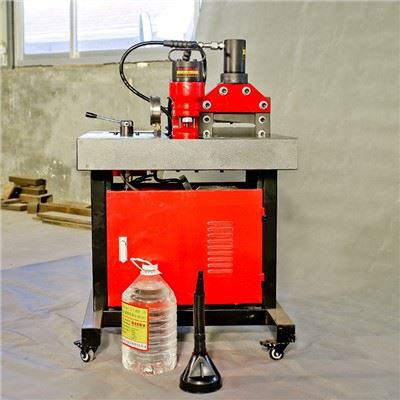
In the industry of electrical power distribution and manufacturing, busbars play a crucial role. These rigid electrical conductors are primarily used to carry substantial currents within switchgear, panel boards, and other power distribution equipment. However, during the production and subsequent handling processes, busbars often become distorted. This is where the busbar leveling machine steps in. As a dependable busbar leveling machine supplier, I am delighted to take you through the leveling process flow of this essential piece of equipment. Busbar Leveling Machine
Initial Inspection and Preparation
Before initiating the actual leveling process, a thorough inspection of the busbars is mandatory. This inspection is carried out to identify any visible signs of damage, such as deep scratches, extensive corrosion, or large deformities. These issues, if left unattended, may not only impede the leveling process but also affect the busbar’s performance in its intended application.
Once the inspection is complete, the busbar needs to be cleaned. Contaminants on the surface of the busbar can interfere with the leveling operation. Cleaning agents that do not leave residue are typically used, ensuring that the busbar is free from dirt, oil, and other debris. After cleaning, the busbar is then carefully measured to determine its current dimensions and the degree of distortion. This data is essential for setting up the leveling machine accurately.
Setting up the Busbar Leveling Machine
Based on the measurement results of the busbar, the busbar leveling machine needs to be properly configured. The first step is to select the appropriate leveling dies. The choice of dies is crucial as they determine the level of pressure applied to the busbar and the final shape of the busbar after leveling. Different types and sizes of busbars require different dies, so choosing the right one is essential for achieving the desired results.
Next, the leveling machine’s parameters must be adjusted. This includes settings related to the speed of the conveyor, the force exerted by the leveling rollers, and the number of passes the busbar will make through the machine. These settings need to be fine – tuned according to the specific characteristics of the busbar being leveled. For example, a thicker and more severely distorted busbar may require a slower speed and higher pressure.
The Leveling Process Itself
Once the machine is set up, the busbar is fed into the leveling machine. The busbar passes through a series of leveling rollers. These rollers are arranged in a staggered pattern, and they apply a gradually increasing and then decreasing pressure on the busbar. The pressure exerted by the rollers helps to reshape the busbar, gradually straightening out any bends, twists, or other deformities.
During the process, the conveyor system moves the busbar steadily through the machine. The speed of the conveyor is carefully controlled to ensure that the leveling process is consistent and effective. In some cases, the busbar may need to pass through the machine multiple times to achieve the required level of flatness and straightness. Each pass further refines the shape of the busbar, bringing it closer to the desired specifications.
Quality Control During Leveling
Quality control is an integral part of the leveling process. Throughout the leveling operation, operators continuously monitor the busbar’s condition. They use various measuring tools, such as straightedges and dial indicators, to check the flatness and straightness of the busbar at regular intervals. If any deviations from the desired specifications are detected, immediate adjustments are made to the machine’s settings.
In addition to physical measurements, the busbar’s surface quality is also inspected. Any signs of indentation, excessive wear, or other surface defects should be addressed promptly. This ensures that the busbar not only meets the dimensional requirements but also has a high – quality surface finish, which is essential for its electrical conductivity and long – term performance.
Post – leveling Treatment
After the leveling process is complete, the busbar undergoes a series of post – leveling treatments. Firstly, it is thoroughly cleaned again to remove any particles generated during the leveling operation. This is followed by a final inspection to confirm that the busbar meets all the required specifications.
Depending on the application, the busbar may also undergo additional processing steps, such as surface coating. A suitable coating can enhance the busbar’s corrosion resistance and electrical insulation properties. These post – leveling treatments are crucial for ensuring that the busbar can be safely and effectively used in its intended electrical system.
Importance of the Leveling Process
The leveling process is of utmost importance for busbars. A level and straight busbar ensures a stable and efficient flow of electrical current. Distorted busbars can lead to increased electrical resistance, which in turn generates heat and may cause system failures. Moreover, in power distribution systems, precise installation of busbars is required, and only leveled busbars can meet these installation requirements. By using a high – quality busbar leveling machine, manufacturers can improve the quality of their products and reduce the risk of electrical faults in their systems.
Our Advantages as a Busbar Leveling Machine Supplier
As a leading busbar leveling machine supplier, we are committed to providing high – quality equipment and comprehensive technical support. Our leveling machines are designed with the latest technology, ensuring high precision and efficiency in the leveling process. They are equipped with advanced control systems that allow for easy adjustment of machine parameters, making it suitable for leveling busbars of various sizes and specifications.

We also have a professional after – sales service team. Whether you encounter problems during the installation, operation, or maintenance of the machine, our team is ready to provide you with prompt assistance. Our goal is to ensure that you can use our busbar leveling machines to their fullest potential and achieve the best results in your production.
Encouraging Contact for Purchase and Negotiation
Bending Die If you are in the market for a reliable busbar leveling machine, I encourage you to get in touch with us. Our team of experts is eager to discuss your specific requirements and help you find the most suitable solution for your business. Whether you are a small – scale manufacturer or a large industrial enterprise, we have the right machine for you. By choosing our products, you can enhance the quality of your busbar production and improve the overall efficiency of your electrical equipment manufacturing process. So, don’t hesitate to contact us for more information and to start a negotiation on purchasing one of our top – notch busbar leveling machines.
References
- Electrical Power Distribution Handbook, McGraw – Hill
- Handbook of Electrical Safety Engineering, Wiley
- Manufacturing Processes for Engineering Materials, Pearson
Jinan Deshang CNC Equipment Co., Ltd.
Jinan Deshang CNC Equipment Co., Ltd. is one of the leading busbar leveling machine manufacturers and suppliers in China. We warmly welcome you to buy high-grade busbar leveling machine for sale here from our factory. All OEM products are with high quality and competitive price. Contact us for more details.
Address: Room 409, Building 2, No. 59 Gongye South Road, High-tech Zone, Jinan City, Shandong Province
E-mail: lisa@busbarchina.com
WebSite: https://www.cncbusbar.com/
