As a seasoned supplier of clutch master cylinders, I’ve witnessed firsthand the evolution and nuances of different clutch master cylinder types. The two most common types in the automotive industry are hydraulic and mechanical clutch master cylinders. Understanding their differences is crucial for both automotive enthusiasts and professionals in the field. In this blog, I’ll delve into the inner workings of these two systems, highlighting their distinct features, advantages, and disadvantages. Clutch Master Cylinder
How They Work
Let’s start by exploring the fundamental operating principles of hydraulic and mechanical clutch master cylinders. A mechanical clutch master cylinder operates through a direct mechanical linkage. Typically, it’s connected to the clutch pedal via a rod or cable. When the driver presses the clutch pedal, this mechanical connection transfers the force directly to the clutch release mechanism. This system is relatively straightforward, relying on physical components to transmit motion.
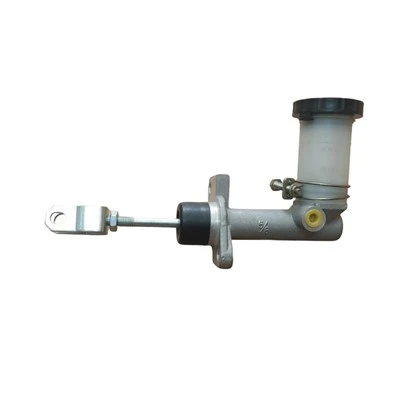
On the other hand, a hydraulic clutch master cylinder uses hydraulic fluid to transmit force. When the clutch pedal is depressed, it pushes a piston inside the master cylinder. This piston then pressurizes the hydraulic fluid, which travels through a series of hoses to the slave cylinder. The slave cylinder, in turn, uses this pressurized fluid to actuate the clutch release mechanism. The hydraulic system effectively converts the linear motion of the pedal into fluid pressure, which can then be used to perform work at a distance.
Design and Construction
The design and construction of hydraulic and mechanical clutch master cylinders also vary significantly. A mechanical clutch master cylinder is generally simpler in design. It consists of a housing, a piston, and a mechanical linkage system. The housing is typically made of metal, providing durability and stability. The piston moves within the housing to transfer the force from the pedal to the release mechanism. Since it relies on direct mechanical connection, the components need to be precisely aligned to ensure smooth operation.
In contrast, a hydraulic clutch master cylinder has a more complex design. In addition to the basic housing and piston, it includes a reservoir for storing hydraulic fluid. The reservoir is essential as it allows for the expansion and contraction of the fluid due to temperature changes. The hydraulic lines used to transfer the fluid are usually made of high – strength rubber or metal – braided hoses to withstand the pressure. The seals within the master cylinder and slave cylinder are also critical components, as any leakage can lead to a loss of hydraulic pressure and a non – functioning clutch.
Performance Characteristics
When it comes to performance, hydraulic and mechanical clutch master cylinders have their own unique traits. A mechanical clutch system often provides a more direct feel. The driver can sense the resistance of the clutch engagement more clearly, which can be beneficial for those who prefer a hands – on driving experience. However, the mechanical linkage can sometimes introduce play or slack, which may result in a less precise clutch engagement. Over time, the mechanical components can also wear out, leading to increased pedal effort and reduced performance.
Hydraulic clutch systems, on the other hand, offer a smoother and more consistent operation. The hydraulic fluid evenly distributes the force, allowing for a more precise and effortless clutch engagement. The lack of a direct mechanical connection also means there is less play in the system, resulting in a more responsive clutch. Additionally, hydraulic systems can better handle high – torque applications, as the fluid can transmit large amounts of force without significant loss. However, hydraulic systems are more sensitive to air bubbles in the fluid, which can cause a spongy pedal feel and reduced performance.
Maintenance Requirements
Maintenance is another area where these two types of clutch master cylinders differ. Mechanical clutch master cylinders generally require less maintenance in the short term. However, the mechanical components such as the rod, cable, and pivot points need to be regularly lubricated to prevent wear and ensure smooth operation. Over time, the cable may stretch or the pivot points may become loose, requiring adjustment or replacement.
Hydraulic clutch master cylinders require more attention to the hydraulic fluid. The fluid should be checked regularly for level and quality. Contaminated or low – level fluid can lead to problems such as a spongy pedal or clutch slippage. Additionally, the hydraulic system needs to be bled periodically to remove any air bubbles that may have entered the system. This process involves opening the bleeder valves at the slave cylinder and allowing the fluid to flow until all the air is removed.
Durability and Longevity
In terms of durability, both systems have their pros and cons. A well – maintained mechanical clutch master cylinder can last a long time. However, the mechanical components are more prone to wear and tear, especially in high – use applications. The constant friction and movement can cause the cable to fray or the pivot points to become damaged.
Hydraulic clutch master cylinders, when properly maintained, can also offer a long service life. The major risk factors for hydraulic systems are fluid leakage and contamination. If the seals within the master or slave cylinder fail, it can lead to a loss of hydraulic pressure and a non – functioning clutch. Regular fluid changes and system inspections can help extend the life of a hydraulic clutch master cylinder.
Applicability in Different Vehicles
The choice between a hydraulic and mechanical clutch master cylinder often depends on the type of vehicle. Mechanical clutch systems are commonly found in older vehicles and some lightweight or budget – friendly cars. Their simplicity and lower cost make them a suitable choice for these applications. They are also easier to repair in the field, as they do not require specialized equipment to work on.
Hydraulic clutch systems are more prevalent in modern vehicles, especially those with high – performance engines or heavy – duty applications. The smooth operation and ability to handle high torque make them ideal for sports cars, trucks, and commercial vehicles. In addition, the growing trend towards automated manual transmissions and dual – clutch transmissions also relies on hydraulic actuation systems for precise control.
Cost Considerations
Cost is an important factor for both vehicle manufacturers and consumers. Mechanical clutch master cylinders are generally less expensive to produce. This is due to their simpler design and fewer components. The cost of installation and maintenance is also relatively low, as they do not require specialized tools or fluid.
Hydraulic clutch master cylinders, however, are more expensive. The cost of the master cylinder itself is higher due to the more complex design and the inclusion of a reservoir and hydraulic lines. The cost of maintaining a hydraulic system, including fluid changes and bleeding, also adds to the overall expense. However, the improved performance and durability of hydraulic systems may justify the higher cost in certain applications.
Conclusion

In conclusion, the differences between hydraulic and mechanical clutch master cylinders are significant. Each type has its own set of advantages and disadvantages, and the choice between them depends on various factors such as performance requirements, cost, and maintenance capabilities. As a clutch master cylinder supplier, I’m well – aware of the diverse needs of our customers. Whether you’re looking for a simple and cost – effective mechanical system or a high – performance hydraulic solution, we have the expertise to provide the right product for your vehicle.
Brake Wheel Cylinder If you’re interested in learning more about our clutch master cylinders or are looking to make a purchase, I encourage you to reach out to us for a detailed discussion. Our team of experts is ready to assist you in finding the perfect clutch master cylinder for your specific requirements.
References
- Automotive Engineering Handbook
- Clutch System Design and Analysis Manual
- Vehicle Maintenance and Repair Guides
Ruian Xinyao Automobile Parts Co., Ltd.
With abundant experience, we are one of the most professional clutch master cylinder manufacturers and suppliers in China. We warmly welcome you to wholesale bulk advanced clutch master cylinder from our factory. If you have any enquiry about cooperation, please feel free to email us.
Address: Xialin Industrial Zone, Tangxia Town, Ruian City,Wenzhou City,Zhejiang Province,China
E-mail: 18969725686@163.com
WebSite: https://www.raxinyao.com/
