If you’re here because you’ve been scratching your head over how to weld thin titanium wire without turning it into a useless blob or a fragile, broken mess, you’re not alone. As someone who’s been in the titanium wire game for over 8 years—first in the workshop, now running our small supply operation—I’ve seen every mistake under the sun. The worst part? When a customer calls panicking because their 0.02mm titanium wire (think the stuff used for tiny medical stents or aerospace sensor leads) welded with their old MIG gun and ended up with a crack so big it’s useless. Thin titanium wire is weirdly unforgiving, but once you get the basics right, it’s totally doable. Let’s break this down like we’re chatting in the workshop break room, no stuffy engineering jargon. Titanium Wire
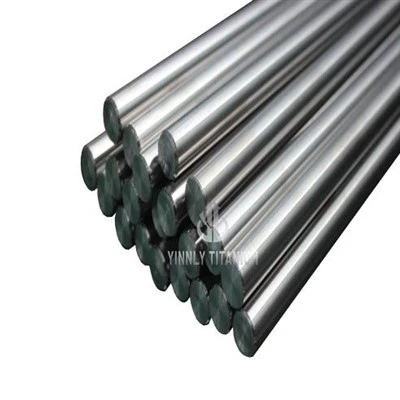
First, let’s talk about why thin titanium wire is such a pain to weld, because that’s half the battle. Unlike steel, which’s pretty forgiving if you cranked the heat a little, titanium reacts like a drama queen to oxygen, nitrogen, and even hydrogen above 800°F. If you leave a weld puddle exposed to air while it’s hot (which thin wire’s puddle is tiny and cools fast, so you’ve got to move quick), you get what’s called “alpha case”—a hard, brittle layer that’ll snap the wire before you even get to use it. Also, thin titanium wire has a super high strength-to-weight ratio, so if you apply too much heat, it’s gonna shrink or warp way worse than steel, and the weld itself’ll be weaker than the surrounding wire. Oh, and forget about using regular steel welding wire or flux—titanium needs its own stuff, or you’re basically making a titanium alloy that’ll corrode or break.
Now, what gear do you actually need? You don’t need a $10k industrial rig, but cutting corners here will come back to bite you. First, the welding process—stick with TIG (Gas Tungsten Arc Welding) over MIG, no cap. MIG’s too fast for thin wire, the constant feed can yank the wire around, and the shielding gas often doesn’t cover the tiny weld puddle properly. TIG gives you way more control over the heat and the puddle size, which is non-negotiable for wire under 1mm thick (which is the stuff most people are working with). If you’re dealing with wire under 0.5mm, you can even use a micro-TIG setup, which has a tiny torch and lower amperage range.
Next up, shielding—this is make or break. Regular argon for TIG? Nah, you need 99.99% pure argon, no cheaper grades with extra impurities. But even that torch shielding isn’t enough for thin wire. The backside (if you’re welding a joint that’s sitting on something, like a lap joint or a butt joint) gets zero shielding, so you’ll need a trailing gas cup. That’s a little attachment that fits on the back of your torch, blowing argon right over the weld as it cools down. For super tiny wire, some folks even use a local shielding cup that clamps right over the joint, so no air can get in. I once had a customer who skipped the trailing cup and his weld cracked 2 days later—turns out the backside had alpha case all over it, so it was brittle.
Then there’s prep work, which people sleep on so hard. Thin titanium wire’s surface is covered in that invisible oxide layer (titanium dioxide) that forms when it’s exposed to air. If you weld over that, the oxygen’ll get into the puddle and cause porosity or brittleness. So, you need to clean the wire. No washing it with regular dish soap—use isopropyl alcohol (91% or higher, not the cheap 70% stuff) and a lint-free microfiber cloth. Even better, use a stainless steel wire brush that’s only for titanium—if you use a brush that’s been used for steel, you’ll get cross-contamination, which leads to rust later. Sanding works too, but go with 200-grit silicon carbide paper, not regular sandpaper, and only sand the parts that’ll be in the weld area, like ½ inch on each side of the joint. And don’t touch the cleaned wire with your bare hands—oil and sweat from your skin will mess it up, use nitrile gloves only.
Now, the actual welding part, which is all about heat control. This is where the magic happens, and where most people mess up. For thin wire—say 0.2mm to 1mm—stick to an amperage range of 5 to 25 amps. If you go higher than that, you’ll burn right through the wire in half a second. Set your TIG machine to DCEN (Direct Current Electrode Negative)—that’s the standard for titanium, because it gives you a narrow, concentrated arc that doesn’t spread out too much, which is exactly what you want for thin stuff. Your electrode should be a 1/16-inch pure tungsten, ground to a sharp point (like a 30-degree angle)—don’t use a rounded tip, that’ll make the arc too wide.
When you’re holding the torch, keep it at a 10-15 degree angle from the workpiece, not straight up. Pre-flow the argon for 2 seconds before you strike the arc—this fills the cup with pure gas so air doesn’t get in right when you start. Then, strike the arc on a piece of scrap titanium first, not directly on your wire. That keeps the arc stable before you get to your actual weld. When you move the torch, use a slow, steady circular motion—don’t jiggle it around like you’re stirring coffee, that’ll overheat the wire. You want a tiny, bead-like puddle that’s the same width as the wire itself, no bigger. If the puddle starts to get shiny and bigger, you’re too hot—pull back a little, lower the amperage.
Wait, what about filler wire? If you’re butt-welding two ends of titanium wire together, do you need filler? For wire under 1mm, usually not—you can just tap the two ends together, touch the arc to the joint, and it’ll melt and fuse on its own. But if you’re making a lap joint or repairing a broken wire that’s been damaged, use matching titanium filler wire—same grade as your wire, obviously. Grade 1 titanium is the most common for thin wire because it’s super ductile, so that’s what we stock most of. Don’t use stainless steel filler, even if someone tries to tell you it works—titanium and steel don’t mix right, and you’ll get a super weak weld that’ll break.
Now, post-weld steps, which are just as important as welding. Right after you finish the weld, keep the argon flowing for another 2-3 seconds (or 5 seconds if you’re using a trailing cup) so the hot weld doesn’t hit air. Once it’s cool to the touch, check for discoloration. If it’s shiny silver, you’re good—no alpha case. If it’s light straw, that’s minor, you can sand it off lightly. If it’s blue, purple, gray, or black, that’s bad—meaning oxygen got in, and you’ll need to pick at that brittle layer with a stainless steel pick or sand it down. Don’t skip this check—we’ve had customers ship us wire that welded purple and it snapped before they even finished assembling their part.
And a pro tip I learned the hard way: practice on scrap titanium wire first. Don’t jump right into your actual project. We send free scrap wire with every bulk order (no, I’m not lying—if you need to test, just ask) specifically so people can get the hang of the amperage and the speed. I once had a customer who welded 10 actual medical device wires before he practiced on scrap and burned all 5—cost him a lot of money, so save yourself the headache.
Wait, what are the common mistakes people make, so you can avoid ‘em? Let’s list ‘em: 1) Using MIG instead of TIG—too much heat, no control. 2) Skipping the trailing gas cup—alpha case is real. 3) Using regular argon or not pre-flowing/post-flowing gas. 4) Touching cleaned wire with bare hands. 5) Using too high amperage—burn through is the #1 mistake. 6) Using wrong filler or cross-contaminated tools. All of these are avoidable, I promise.
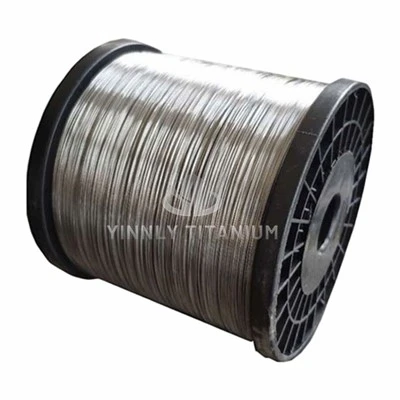
At the end of the day, welding thin titanium wire isn’t rocket science, but it’s precise work. If you take your time, stick to the gear that works, and don’t skip the prep and gas shielding, you’ll get solid, flexible welds that don’t break. For reference, most of the titanium wire we supply is used in aerospace sensors, medical sutures, and even custom jewelry, so we know this stuff inside and out. If you’re working on a project and need thin titanium wire, or you’re not sure about the best setup for your specific wire size, reach out—we’re here to help with recommendations, scrap for practice, or whatever you need to get your weld right. No pushy sales stuff, just guys who know titanium wire and want you to succeed.
Titanium Flange References:
- "Titanium Welding Guidelines for Micro and Thin-Walled Components." American Welding Society, 2021.
- Micro-TIG Welding for Medical Device Applications. Medical Design & Manufacturing, 2022.
- Oxygen Contamination in Titanium Welds: Alpha Case Formation and Mitigation. Welding Journal, 2019.
- Titanium Wire Properties and Processing for Precision Applications. Titanium Industry Update, 2020.
Baoji Yinnly Titanium Co., Ltd.
Baoji Yinnly Titanium Co., Ltd. is one of the most professional titanium wire manufacturers and suppliers in China, featured by quality products and good service. Please rest assured to buy bulk titanium wire in stock here and get quotation from our factory. Customized orders are welcome.
Address: Unit 902, Building 1, Creative Building, No.195, Gaoxin Avenue, High-tech Zone, Baoji City, Shaanxi Province
E-mail: anna@yinnlyti.com
WebSite: https://www.yinnlyti.com/
