As a clean room supplier with over a decade of hands-on experience designing, installing, and maintaining controlled environments for industries ranging from semiconductor manufacturing to pharmaceutical compounding, I’ve learned that a clean room is only as reliable as its monitoring systems. When a client first reaches out to me with a new clean room project, they often start by asking about the hardware and materials for the walls, filters, and air locks—but the first question I always circle back to is: “How will you monitor this space to ensure it stays compliant?” That’s because clean rooms aren’t static; they’re dynamic environments where even a small shift in particle count, temperature, or pressure can derail production, compromise product quality, or lead to regulatory non-compliance. Clean Room

Over the years, I’ve walked countless clients through the layers of monitoring systems we integrate into every clean room we build. These systems aren’t just optional add-ons—they’re the backbone of clean room validation, ongoing maintenance, and risk mitigation. Let’s break down the key monitoring systems we use, why they matter, and how they work together to keep a clean room performing as it should.
First, and most fundamental, is particle counting monitoring. For any clean room, the primary goal is to limit the number of suspended airborne particles—particles that can range from dust mites, skin cells, and fabric lint to tiny metal shavings or chemical residues. Different industries have vastly different particle limits: a Class 1 clean room (used for semiconductor wafer fabrication) allows only 1 particle of 0.1 micrometers per cubic foot, while a Class 100,000 clean room (used for some medical device assembly) permits 100,000 particles of 0.5 micrometers per cubic foot. Particle counters are the tools that measure these levels in real time.
We don’t just deploy one particle counter in a clean room, either. We strategically place them in high-risk zones: near air supply outlets, at the entrance of the clean room (where unfiltered air might seep in), and around workstations that are critical to the process. Continuous monitoring particle counters, unlike portable ones used for periodic testing, provide live data that feeds into a central monitoring panel. This means if a filter starts to fail and particle levels spike, the system alerts our team and the client immediately—before a batch of product is compromised. We also recommend daily spot checks with portable particle counters to validate the continuous data, because cross-verification ensures accuracy.
Next up, environmental parameter monitoring, which covers temperature, humidity, and differential pressure. These three variables might seem less tangible than particles, but they’re just as critical. For pharmaceutical clean rooms, for example, humidity levels control microbial growth—too low and workers build up static electricity, which can damage sensitive electronics or ignite flammable materials; too high and mold and bacteria can multiply. For semiconductor fabs, temperature stability is non-negotiable: even a 0.5-degree Celsius shift can alter the precision of photolithography processes, ruining multi-million dollar wafers.
Differential pressure monitoring is another key part of this category. Clean rooms are designed to maintain a pressure difference relative to adjacent spaces—usually higher than non-clean rooms to prevent unfiltered air from flowing into the clean room, or lower for negative-pressure clean rooms (like those handling hazardous materials, to contain contaminants inside). We install differential pressure transmitters at every airlock, doorway, and junction between the clean room and surrounding areas. If pressure drops below the required setpoint, the system triggers an alarm—often a loud beep on-site and a push notification to our service team—so we can adjust the HVAC system before contaminants enter.
A lot of first-time clients ask us why we don’t just use basic analog gauges for these parameters, and the answer is simple: analog gauges require manual checks, which are easy to miss, especially for facilities operating 24/7. Digital, integrated monitoring systems automate these checks, log data consistently, and eliminate human error. For regulated industries like pharmaceuticals, this automated logging is also a regulatory requirement—agencies like the FDA require continuous, auditable data of environmental conditions, so manual paper logs are no longer acceptable.
Then there’s air flow and velocity monitoring. The entire clean room’s performance depends on the flow of filtered air—usually laminar (smooth, unidirectional) flow for high-grade clean rooms, or turbulent (well-mixed) flow for lower-grade spaces. Air flow velocity ensures that any particles generated by workers or equipment are quickly carried away and filtered out, rather than settling on work surfaces.
We use hot-wire anemometers to measure air velocity at multiple points across the clean room, right after HEPA filters (the high-efficiency particulate air filters that capture 99.97% of 0.3-micrometer particles). If velocity is too low, particles linger; if it’s too high, it wastes energy and can even disrupt delicate processes. We tie these anemometers into the central monitoring system, so any deviations trigger an alarm. For example, in a pharmaceutical clean room where sterile products are assembled, consistent air flow prevents cross-contamination between different product lines—ensuring that a batch of antibiotic isn’t exposed to residues from a previous batch.
The next system we integrate is contamination monitoring for surface and personnel. Airborne particles are a major risk, but surface contamination—on workstations, tools, and even worker gloves—can be just as damaging. For semiconductor manufacturing, a single particle on a silicon wafer can render an entire chip useless, so we use surface particle samplers that swab test areas and count particles in real time. For pharmaceutical clean rooms, we might use ATP (adenosine triphosphate) swab tests, which detect organic residues (from skin, sweat, or cleaning products) that could support microbial growth.
Personnel contamination monitoring is also a critical layer. Workers are the single biggest source of particles in a clean room—their skin sheds thousands of particles per minute, and their clothing can carry lint. We monitor the air in gowning rooms (the area just before entering the clean room) to ensure that gowned workers aren’t releasing excess particles. Some of our higher-grade clean rooms also have personnel air showers, which blow off loose particles, and the monitoring system checks that the air shower is working correctly before the airlock door unlocks to let a worker into the clean room.
For clients handling hazardous materials, we add a specialized monitoring system: gas and chemical detection. These clean rooms (used for chemical synthesis, for example) require monitoring for volatile organic compounds (VOCs), heavy metal vapors, or other toxic substances. We install gas detectors that track levels of these chemicals in the air, with alarms set at safe, regulatory-approved limits. If levels rise, the system can trigger shutdowns, increase ventilation, and alert emergency response teams—protecting workers and preventing environmental contamination.
Now, a common misconception I run into is that all these systems are just “more equipment” that add cost and complexity. But from my experience as a clean room supplier, investing in integrated monitoring systems saves clients far more in the long run. For example, a semiconductor client of mine once skipped advanced particle monitoring on a project, relying on monthly manual testing. When a filter failed unnoticed, a batch of 1,000 wafers was ruined, costing them over $2 million in product and timeline delays. After that, they upgraded to our real-time monitoring system, and have not had a similar issue in the five years since.
Another benefit of integrated monitoring is centralized data management. Our systems collect data 24/7, which can be accessed remotely via a secure dashboard. Clients can review historical data to identify trends—like a gradual drop in HEPA filter efficiency over time, which means we can replace the filter before it fails, rather than reacting to a crisis. For regulatory audits, the data is pre-formatted into reports that meet FDA, ISO, and SEMI standards, so audit time is cut from weeks to a few days.
Of course, no monitoring system is set-it-and-forget-it. We recommend annual calibration of all sensors and counters, regular maintenance checks, and software updates to ensure the system stays accurate. That’s why we also offer ongoing service packages as a clean room supplier—our team will come in, test the monitoring equipment, adjust setpoints as needed, and train the client’s staff to interpret the data and respond to alarms correctly.
If you’re planning a new clean room, upgrading an existing one, or struggling with consistent monitoring for an existing space, don’t treat monitoring as an afterthought. These systems are what turn a room with filtered air into a compliant, reliable environment that protects your products, your workers, and your business.
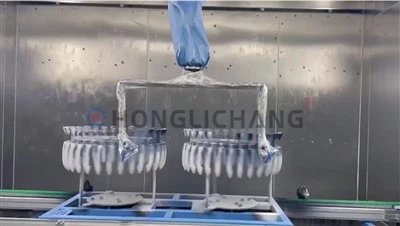
To discuss your specific clean room monitoring needs, connect with our team to schedule a consultation and review how our tailored monitoring solutions can fit your operational and regulatory requirements.
Clean Room References
- ISO 14644-1: Cleanrooms and associated controlled environments — Part 1: Classification of air cleanliness by particle concentration. International Organization for Standardization, 2015.
- FDA 21 CFR Part 211: Current Good Manufacturing Practice for Finished Pharmaceuticals. U.S. Food and Drug Administration, 2023.
- SEMI F42: Specification for a Monitoring System for Semiconductor Manufacturing Cleanrooms. Semiconductor Equipment and Materials International, 2022.
- ASME B133.1: Ventilation of Hazardous Materials Handling Facilities. American Society of Mechanical Engineers, 2021.
- National Cleanroom Association (NCRA) Guidelines for Clean Room Monitoring and Validation. NCRA, 2020.
Shenzhen Honglichang Machinery Manufacturing Co., Ltd.
We are one of the most professional clean room manufacturers and suppliers in China, also support customized service. Please feel free to buy advanced clean room for sale here from our factory. Welcome to contact us for quotation.
Address: No. A802, Building 2, Tianan Digital Plaza, Longgang, Shenzhen, China
E-mail: victor@honglichang.com
WebSite: https://www.honglichang-paint.com/
