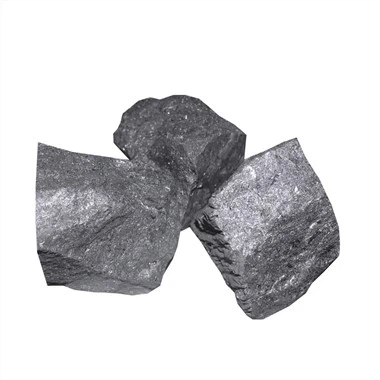
Ferro silicon manganese (FeSiMn) is a crucial alloy in the steelmaking industry, known for its ability to enhance the strength, hardness, and wear resistance of steel. As a Ferro Silicon Manganese supplier, I understand the importance of ensuring the quality of our products. In this blog, I will discuss the various testing methods used to evaluate the properties and quality of Ferro Silicon Manganese. Ferro Silicon Manganese
Chemical Analysis
One of the most fundamental testing methods for Ferro Silicon Manganese is chemical analysis. This process involves determining the exact chemical composition of the alloy, including the percentages of silicon, manganese, iron, and other elements. There are several techniques available for chemical analysis, each with its own advantages and limitations.
Spectroscopic Analysis
Spectroscopic analysis is a widely used method for chemical analysis of Ferro Silicon Manganese. It involves measuring the absorption or emission of light by the alloy to determine the concentration of different elements. One common spectroscopic technique is optical emission spectroscopy (OES), which uses a high – energy spark or arc to vaporize a small sample of the alloy. The emitted light is then analyzed to identify and quantify the elements present.
Another spectroscopic method is X – ray fluorescence (XRF) analysis. XRF works by irradiating the sample with X – rays, which causes the atoms in the sample to emit characteristic X – rays. By measuring the energy and intensity of these emitted X – rays, the elemental composition of the sample can be determined. XRF is a non – destructive method, which means that the sample can be reused after analysis.
Wet Chemical Analysis
Wet chemical analysis is a traditional method that involves dissolving the sample in a suitable solvent and then performing a series of chemical reactions to determine the concentration of different elements. This method is highly accurate and can provide detailed information about the chemical composition of the alloy. However, it is time – consuming and requires skilled technicians to perform the analysis.
Physical Testing
In addition to chemical analysis, physical testing is also essential for evaluating the quality of Ferro Silicon Manganese. Physical testing can provide information about the density, hardness, and other physical properties of the alloy.
Density Measurement
Density is an important physical property of Ferro Silicon Manganese. It can be measured using a variety of methods, such as the Archimedes’ principle. In this method, the sample is weighed in air and then in a liquid of known density. The difference in weight is used to calculate the volume of the sample, and the density is then determined by dividing the mass of the sample by its volume.
Hardness Testing
Hardness is another important physical property of Ferro Silicon Manganese. It can be measured using several methods, such as the Brinell hardness test, the Rockwell hardness test, and the Vickers hardness test. These tests involve applying a known load to the surface of the sample and measuring the size of the indentation left by the load. The hardness value is then calculated based on the size of the indentation.
Microstructural Analysis
Microstructural analysis is used to examine the internal structure of Ferro Silicon Manganese at the microscopic level. This can provide valuable information about the phase composition, grain size, and other microstructural features of the alloy.
Optical Microscopy
Optical microscopy is a commonly used method for microstructural analysis. It involves polishing the surface of the sample and then etching it with a suitable chemical solution to reveal the microstructure. The sample is then examined under an optical microscope to observe the different phases and microstructural features.
Scanning Electron Microscopy (SEM)
Scanning electron microscopy is a more advanced method for microstructural analysis. It uses a beam of electrons to scan the surface of the sample, producing high – resolution images of the microstructure. SEM can also be used in conjunction with energy – dispersive X – ray spectroscopy (EDS) to analyze the elemental composition of the different phases in the alloy.
Thermal Analysis
Thermal analysis is used to study the thermal properties of Ferro Silicon Manganese, such as its melting point, heat capacity, and thermal expansion.
Differential Scanning Calorimetry (DSC)
Differential scanning calorimetry is a technique used to measure the heat flow into or out of a sample as it is heated or cooled. By measuring the heat flow, the melting point, crystallization temperature, and other thermal properties of the alloy can be determined.
Thermogravimetric Analysis (TGA)
Thermogravimetric analysis is used to measure the change in mass of a sample as it is heated or cooled. This can provide information about the thermal stability of the alloy and the presence of any volatile components.
Mechanical Testing
Mechanical testing is used to evaluate the mechanical properties of Ferro Silicon Manganese, such as its strength, ductility, and toughness.
Tensile Testing
Tensile testing is a common method for evaluating the strength and ductility of Ferro Silicon Manganese. In this test, a sample of the alloy is subjected to a gradually increasing tensile force until it breaks. The maximum force that the sample can withstand is called the tensile strength, and the amount of deformation before breaking is called the elongation.
Impact Testing
Impact testing is used to evaluate the toughness of Ferro Silicon Manganese. In this test, a sample of the alloy is subjected to a sudden impact load, and the energy absorbed by the sample is measured. The higher the energy absorbed, the tougher the alloy.
Importance of Testing
The testing methods described above are crucial for ensuring the quality and performance of Ferro Silicon Manganese. By accurately determining the chemical composition, physical properties, microstructural features, and mechanical properties of the alloy, we can ensure that it meets the specific requirements of our customers.
For example, in the steelmaking industry, the chemical composition of Ferro Silicon Manganese can significantly affect the properties of the final steel product. If the alloy contains too much or too little of certain elements, it can lead to problems such as reduced strength, poor ductility, or increased susceptibility to corrosion.
Physical testing is also important for ensuring that the alloy has the appropriate density, hardness, and other physical properties. These properties can affect the processing and performance of the alloy in various applications.
Microstructural analysis can provide insights into the internal structure of the alloy, which can help us understand its behavior under different conditions. For example, a fine – grained microstructure can improve the strength and toughness of the alloy, while a coarse – grained microstructure may lead to reduced mechanical properties.
Thermal analysis and mechanical testing are essential for evaluating the thermal and mechanical performance of the alloy. This information is crucial for ensuring that the alloy can withstand the high temperatures and stresses encountered in steelmaking and other applications.
Conclusion
As a Ferro Silicon Manganese supplier, we are committed to providing high – quality products to our customers. The testing methods described in this blog play a crucial role in ensuring the quality and performance of our Ferro Silicon Manganese. By using a combination of chemical analysis, physical testing, microstructural analysis, thermal analysis, and mechanical testing, we can accurately evaluate the properties of the alloy and ensure that it meets the specific requirements of our customers.
Tungsten Carbide Powder If you are interested in purchasing Ferro Silicon Manganese, we invite you to contact us for more information. Our team of experts is ready to assist you in finding the right product for your needs and answering any questions you may have.
References
- ASTM International. (20XX). Standard test methods for chemical analysis of ferroalloys.
- ASM Handbook Committee. (20XX). ASM Handbook, Volume 7: Powder Metallurgy, Metalworking, and Welding.
- Callister, W. D., & Rethwisch, D. G. (20XX). Materials Science and Engineering: An Introduction.
ZhenAn International Co., Limited
ZhenAn International Co., Limited is one of the leading ferro silicon manganese manufacturers and suppliers in China. We warmly welcome you to wholesale discount ferro silicon manganese in stock here from our factory. All our products are with high quality and competitive price.
Address: Huafu Commercial Center, Wenfeng District, Anyang City, Henan Province, China
E-mail: info@zaferroalloy.com
WebSite: https://www.ferro-silicon-alloy.com/
